Wednesday, 8 March 2017

Inside 'The Skin of Our Teeth'

Opening our 2017 season is Thornton Wilder’s The Skin of Our Teeth, which the playwright himself called “The most ambitious project I have ever approached.”

The original Broadway poster for The Skin of Our Teeth, 1942.
Relishing in staging the seemingly absurd and impossible, the play centers on an outwardly normal suburban family from the fictional town of Excelsior, New Jersey. It soon becomes apparent, however, that the world of the Antrobus family is anything but normal: dinosaurs prowl through the living room, characters address the audience, backstage crew enter and speak, and the set is disintegrating. This “so-called” New Jersey is merely the starting point for navigating 5,000 years of family antics and apocalyptic disasters. Through an Ice Age, Flood, and World War, the play’s title (Job 19:20  I am escaped with the skin of my teeth) makes the point clear: no matter how narrow the escape, the human race survives.

Simultaneously taking place in contemporary and prehistoric times, the set-up can sound confusing until considering another “modern stone-age family”. The Flintstones (1960’s) was a clear cave-man take on the popular family sitcom The Honeymooners (1950’s). Though the cartoon was both an absurd and satirical social commentary, it only takes the intro for The Flintstones to make sense. The Skin of Our Teeth invites audiences into a similar situation: Biblical archetypes mix with mid-century American dynamics to create something absurdly silly and still profoundly compelling. Instead of cartoons, the zaniness is theatre itself. The characters in The Skin of Our Teeth are actors putting up ‘The Skin of Our Teeth’, and regularly step out of character to complain about their roles or whenever the play feels particularly incomprehensible. With innocent and childlike disruptiveness, Wilder explodes ideas and characters not strictly confined to literal time. With little control over where we’ve been, where we’re going, or what might happen to us along the way, the audience (like humanity) is meant to hang on for the ride and get through it together.
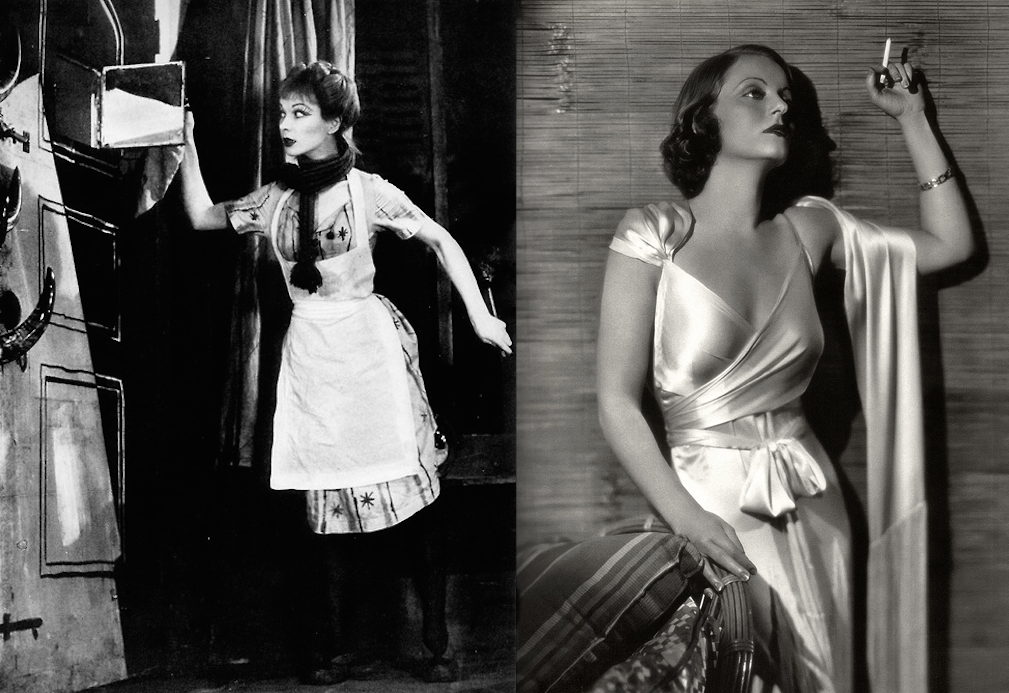
Two of the play's famous leading ladies: (Left) Vivien Leigh in a 1946 production at the Piccadilly Theatre. (Right) Tallulah Bankhead originated Sabina on Broadway in 1942. Photo copyright First Night Vintage.

 When The Skin of Our Teeth premiered at New Haven’s Shubert Theatre on October 15, 1942, it received a notoriously mixed reaction (legend tells of patrons racing from the theatre at first intermission). At its New York premiere a month later, it received significantly warmer reception. In 1943, it won the Pulitzer Prize. Breaking nearly every established theatrical convention, the epic comedy-drama rightfully earned its place as the most unorthodox of classic American comedies and the assertion that “no other American play has ever come anywhere near it.” (James Woolcott, theatre critic).

Wilder had firmly established his literary reputation as a novelist with his immensely popular, The Bridge of San Luis Rey (1927), which won his first Pulitzer Prize. In the 30’s, he began writing plays for Broadway and utilizing unusual structures and techniques. Our Town (1938), his best-known and most frequently performed work, broke ground with its bare stage setting and time navigating narrator. Earning Wilder his second Pulitzer Prize, it also demonstrates his long-standing fascination with the effects of the passage of time on individuals and societies. That preoccupation also surfaces in The Skin of Our Teeth, which emerged onto stages just as America (and Wilder himself) entered World War II. He later reflected that “It was written on the eve of our entrance into the war and under strong emotion, and I think it mostly comes alive under conditions of crisis.”

He was writing it as the world was descending into chaos. I think everybody was wondering: “Will we get through this? And if we do, what then? Will we learn anything? Will we grow or change or do it better the next time?"... The characters are continually hitting rock bottom and then finding a way – and it’s usually with the help of other people – to have the hope to move forward, despite the catastrophic situation that is facing them in that immediate moment. 
- Arin Arbus 

 In later years Wilder was awarded the Presidential Medal of Freedom and his  novel, The Eighth Day (1967), earned the National Book Award. In 1975, Wilder died in his sleep in Hamden Connecticut, where he lived with his sister.

Three time Pulitzer Prize winning novelist & playwright, Thornton Wilder.

One of the toughest and most complicated minds in American Theatre, Wilder’s plays have so affected theatre tradition that few serious dramatists ignore them. Their singular humanity and artistic vision continue to resonate well beyond his time.


Any play with three apocalypses, talking dinosaurs, and characters who refuse to say their lines is clearly aiming high. But when that play has a housemaid tell us in her opening speech that it will address all “the troubles the human race has gone through,” it may seem destined for ambitious failure. The Skin of Our Teeth, however, succeeds. A vast, symbolic play about all of humanity, Thornton Wilder’s masterpiece is also a witty, compassionate look at the struggles of a single family. Sure, the Antrobus clan (whose name derives from the Greek for humanity) may weather the calamities of ice ages, floods, and wars, but they also face the struggle of raising children, going to work, and trying to stay faithful for five thousand years. With staggering imagination, Wilder reminds us that the destruction and rebirth on his stage take their shape from the cycle of our own lives. It’s no accident that Sabina, the saucy housemaid who directly addresses us with her analysis of the play, closes by insisting, “We have to go on for ages and ages yet.” Onstage or off, she’s telling us, we’re all enduing the same old thing. 
- Mark Blankenship 
Notes on the End of the World, The Thornton Wilder Society


Join us at the end of this month as we attempt to stage the survival of the entire human race. It's a rare and exciting opportunity to catch 'The Skin of Our Teeth', at Rosebud Theatre, March 31 - June 3. For tickets and further information, visit rosebudtheatre.com

Wednesday, 1 March 2017

State of the Art: Radio Drama

This week we're talking shop with radio drama afficiando, Peter Church, who last performed on the Rosebud stage in 'Miracle on 34th Street' and returns in the upcoming 'The Skin of Our Teeth'. In-between, we sounded him out about the current state-of-the-art of radio drama, his passion for it, and his recommendations in the genre. This 'older' fashioned art form seems to be making a comeback, and Peter talks about why! 


Peter Chuch, performing live in a staged radio drama. Photo by Kevin Jacob 
In your last interview, you said, “Radio drama, to my mind, is one of the purest kinds of Theatre.” Can you first define "Radio Drama"? Is it any story on the radio, or is it also theatre plays presented in a radio ‘style’? 
“Radio Drama” is technically a misnomer. Most modern audiences are listening on their iPods or computers, so “Audio Drama” or “Audio Entertainment” would be a more accurate term. That said, I personally prefer "Radio Drama" because, even now, it still conjures the image of an actor in place behind a microphone and the listening audience huddled at home, sharing the experience around a little wooden box.
Theatre productions using the radio style are trickier to categorize. These hybrids are having a bit of a Renaissance right now. The audience usually watches a company of actors performing a play around microphones. Is it live theatre? Yes. And no. Is it a Radio Play? No. And yes!
I’ve written a number of stage shows in this style, and have waffled quite a bit on what to call them. How can I help an audience member understand what they’re in for? “A live radio-style stage show” is clunky. “An audiophonic experience”, is confusing at best (and pretentious at worst). For now, I think I’ve settled on “A staged radio drama”. 
Thankfully, this kind of theatre is gaining enough exposure that I find myself having to explain it less and less.

Why do you think this style is gaining popularity? Is it just a throw-back to a simpler time?
The convention certainly seems to be taking off! It can seem like a strange mix at first, [Theatres producing shows about radio performers telling a story] but I think it’s gaining traction for a number of reasons:
  • It’s affordable for theatres to produce. In keeping with the tradition of the radio plays of the 1930’s - 50’s, actors stand around the microphone and read from the script. There’s no memorization period for the cast, and minimal staging required, so you can cut the expensive rehearsal process in half.
  • It worked then, it works now. Before we had the technology to record radio plays, the shows were performed [and transmitted] in front of live audiences.
  • Audiences enjoy a creative workout. Our imaginations are becoming lazy. We’re saturated in visual forms of entertainment that do most of the work for us. Or as Vincent Price said, “We’re trained not to use the imagination, but if you stick with it (radio drama) for a couple of hours those imagination buds start working.” Younger theatre-going audiences are generally more open now to experimenting with new formats like Radio Drama on stage, and older audiences remember the radio shows from their past and come to the live stage shows out of a sense of nostalgia.

What is it about radio, specifically, that you find so essentially pure?
Radio Drama is aptly referred to as “Theatre of the Mind”, and I think therein lies its great power. I deliberately write my staged radio dramas with the intention that audience members should be able to close their eyes at any point and still be absorbed in the story. The better your imagination, the better the story! Like ancient reciters of the great epics, an audio drama suggests the action to the listener and from there imaginations should take over.

One of the most popular mystery dramas of its time, The Whistler was an American radio program from 1942 - 1955.

Do you have a favorite radio play? Or is there a specific genre you’re drawn to?
Oh, gosh. That’s like asking a Librarian to choose a favorite book!

My favorite shows tend to be those “Real Thriller-Dillers!” from the 1950’s. While I love old time comedies like The Jack Benny Show or Our Miss Brooks and science fiction series like Dimension X, nothing quite beats the more lurid tales like Lights Out, Inner Sanctum, The Witch’s Tale, or The Whistler. Part of my preference, no doubt, comes from the psychological element of radio (the unseen will always be scarier than the seen), but I think it’s also because it’s really exciting to be shocked and surprised by a supposedly dead medium. At the height of the Golden Age of Radio, NBC and CBS were filled with sophisticated and harboiled programs that continue to represent the very best of the art form: shows like Suspense, Gunsmoke, and Escape still provoke and engage.

It's a Wonderful Life: On the Air at Pacific Theatre. Photo by Damon Calderwood.

Listening to a story on the radio tends to be strangely intimate, as it takes a certain focus to process purely 'aural' information and create the world in which it makes sense. Do you think theatre can distill the vulnerability that comes when people listen so acutely? Or is it the magic of the medium of radio?
I think it’s possible to have moments in the theatre with that kind of power or vulnerability, but I’m not sure that we can “capture” or control it. When done right, radio is able to hardwire itself into the listener’s imagination. 
In traditional theatre, a particular moment or a particular production can sometimes transport you. When it happens, it’s glorious, but I find it fleeting and capricious. There are so many factors that can pull an audience member out of the story on stage. In radio, the Storyteller is at the wheel and the brain can’t help but imagine what it’s hearing.
Visual entertainment is passive: put-upon the viewer. Reading a book is almost the opposite; it takes full effort from the reader, but they can shut that effort off on a whim. Radio Drama lives somewhere between the two.

I was once editing an Audio Play and accidentally dropped a sound effect into the wrong part of the track (it was a phone hitting the floor). I put the sound cue in a few seconds too early, and when I played it back, my brain was instantly convinced that the female character had just been hit across the head with a phone! The actor and the sound effect worked together to trick my brain. I wrote the play. I recorded the play. I acted in the play. And yet, with a simple insinuation from a sound effect, for a second… I believed.


Peter next to the Foley (Sound Effects) Table. Photo by Rick Colhoun.


What elements make a great radio drama, in your opinion?
The best radio plays aren’t just screen plays with sound effects slapped on them. Instead, they are carefully woven for a blind audience. Whether it’s comedy or drama, the best plays exploit the listener’s handicap and use it against them.

Here are a few clips from series that I think do it well. Hear how well the writers use our lack of vision to make the stories come alive:

JACK BENNY

Jack attempts to get his debauched orchestra members to clean up their act at the start of the New Year.

OUR MISS BROOKS

School Teacher, Miss Brooks, plays hooky to go skiing with handsome co-worker, Mr.Boynton. Suddenly the Principal, Mr.Conklin, shows up to catch her with her skis on.

THE WHISTLER

The classic scenario of a young couple stopping at a spooky old house after their car breaks down. Pay attention to just how dark the setting is, and how the actors use their proximity to the mic to help get inside your head. The sound quality is a bit poor on this one, so I suggest listening with the volume up and the lights off.

GUNSMOKE

Marshall Matt Dillon rides into a small town only to find out too late that the whole town is being held hostage in a barn by a gang leader looking to avenge the recent death of his brother. They capture the Marshall and are threatening to execute hostages if the identity of the hero who shot the outlaw’s brother isn’t revealed.

Is there a modern day equivalent to what was happening with radio in the 20th Century?
That’s a fantastic question. Hopefully it doesn’t seem like too obvious of an answer but I strongly believe that the Internet can easily be likened to radio in the 1930’s. It’s a relatively young medium that is radically globalizing our communities, and is simultaneously being used for news and for entertainment… It's interesting, however, that while the web has drastically changed how we consume our entertainment, it hasn’t much changed what we’re consuming.


Peter Church performs in A Christmas Carol: On the Air at Pacific Theatre. Photo by Damon Calderwood.

Lastly, any 'new' radio projects in the works?
I'm currently working on an exciting project with a producer in the Netherlands who has me scripting offstage dialogue for her modernization of Medea. The idea is that the audience is sitting in the theatre watching a young child alone in their room, while the (soon-to be-tragic) argument that leads to the child's murder is unravelling in the room next door. Not a traditional radio play at all, but we're using the same techniques for the listening audience!


Peter Church is performing artist currently residing in Airdrie, AB. His Audio Drama credits for the stage include 'It's a Wonderful Life: On the Air', 'A Christmas Carol: On the Air', 'Christmas Radio Double Feature: Gift of the Magi by O. Henry & The Happy Prince by Oscar Wilde', 'Old Time Gospel Radio Hour' (co-written with Ron Reed & Kenton Klassen), 'I Love a Mystery!' (Original Radio Series Pastiche), and 'Radio Project X', a monthly radio cabaret in Toronto where he's co-founder, producer, writer, and director. His Audio adaptations include 'The Ghosts of Mariposa' by S.C. Pinney, 'The Wooden Angel' by Jason Hildebrand, 'The Other Celia' by Theodore Sturgeon, 'Black Ice and Hockey' by Peter H. Church (namesake and uncle), 'The Trail of the Flicker Flea' by C.H.M. Church (Grandfather), and 'Radio's Revenge': an anthology podcast of which Peter is also co-founder, producer, writer and director.

Tuesday, 14 February 2017

Introducing Frank Nickel - Executive Director!

It's official! Frank Nickel has been appointed Executive Director for Rosebud Centre of the Arts (for details, click here). Born and raised in British Columbia, Frank received a B.F.A. in Theatre from Simon Fraser University. He comes to Rosebud after spending the past 10 + years working at Vancouver’s Pacific Theatre, most recently as General Manager. Since 2004, Nickel has produced over 65 productions in Vancouver, co-founded two theatre companies (Genus Theatre and District 13 Presents), serves on the board for The Royal Canadian Theatre Company, and improvises with The Panic Squad. In 2015, Nickel received the John Hobday Award for Arts Management from Canada Council for the Arts.

Frank as Antipholus of Syracuse in Shadow & Dreams Theatre's production of The Comedy of Errors.

In regards to theatre, it sounds like you've done it all! Let’s have a list of all the roles you’ve filled over the years. Go!
(In your brain say these as fast as possible like a tongue-twister) Sound designer, lighting designer, props buyer, carpenter, producer, actor, bartender, painter, welder, seat repair technician, front-of-house manager, box office, ticket ripper, volunteer coordinator, costume sewer, airport driver, usher, stage manager, running crew, quick-change assistant, projection designer, vacuum cleaning expert, production manager, IT guy who sorta-knows-what-he-is-doing-but-some-of-the-time-makes-it-worse, poster putter upper, board member, and… General Manager.

Frank enjoying some of his more glamorous theatre responsibilities.

When did you first discover your passion for theatre?
I was in Grade 11 drama and my teacher did a half semester on improv games and I fell in love with the theatre then and there. The idea that you could say or do anything and whatever you did was “correct” blew my high-school brain wide open. In university, I realized that within the crazy world of improv there is a detailed framework of rules that make it work. The freedom within the form is what keeps me captivated as an artist and arts administrator.

What’s a project you’re proud of?
In early 2012, Pacific Theatre joined forces with the Arts Club Theatre and Bard on the Beach to be the lead proponent to outfit a new 44,000 sq ft theatre and production hub in Vancouver’s Olympic Village. The prospect of building a new 'state of the art' theatre was daunting and thrilling at the same time. As Budget Chair of the 12 million dollar project for the first 8 months (at that point the project became too expensive for Pacific Theatre to keep participating in), I learned more about capital projects, financing, partnership building, costing, and governance than any M.B.A. program could have given me.

During this time I managed to connect with the Head of Lighting at the Oregon Shakespeare Festival (the largest non-profit theatre organization in North America) to arrange a private backstage tour of the Thomas Theatre, a 'state of the art' flexible venue (thrust, arena, avenue) that can accommodate between 270-360 seats depending on the configuration. With automated traps, lifts under the stage, and electronic fly systems in the grid, I was in theatre geek bliss for 2 hours. Don’t get me wrong, there are a lot of amazing theatres in North America, but this is my favorite so far. Looking back at that point in my career, I’ve realized a personal bucket list item for me will be to build a new purpose built theatre space that helps move an organization into the next phase of its life.

Oregon Shakespeare Festival's Thomas Theatre. Round Configuration.

You’ve co-founded two theatre companies of your own (all while managing Pacific Theatre). Can you tell us a little about them?
I started Genus Theatre right after I graduated from SFU. Myself and five other classmates were inspired by sketch comedy and Saturday Night Live’s use of short films, so it seemed only logical to start a company, write everything from scratch, and invite our friends and family to a makeshift venue to see what we had come up with. Six original shows later, we knew we had something special. But as with most things in life, life started to demand more of us. Genus is still alive, but all the original members have since moved on. In 2015, I co-founded my second company with my best friend, Mark Vandenberg, (District 13 Presents) so we could produce one of his original musical parodies in the Vancouver Fringe Festival. And it worked! Hunger Games: The Musical was a hit at the Fringe, selling out 6 of our 8 shows and garnering some decent critical acclaim. The following year we produced Catching Fire: The Musical and we are on the wait list for the 2017 Fringe Festival to hopefully finish off the trilogy. Mark and our good friend Rick Colhoun (founding member of Hokus Pick) are collaborating on our next passion-parody-project, Die Hard: The Musical. Who knows where that will go, but it is a ton of fun to be in the rehearsal room and work with a bunch of talented producers and musical theatre actors to bring these parodies to life. Does it count as work when you end up laughing 80% of the time? Here’s our poster from the first show just for fun.


What’s your “must-have” morning ritual?
Venti Americano from the 'Bucks with a splash of cream and 1 sugar. I have been told that breakfast is the most important meal of the day, but unless I do a full-on brunch I tend to skip right to lunch after my Americano.

Netflix recommendation(s)?
My wife and I have several we’re enthusiastic to share, in no particular order: Sherlock, Unbreakable Kimmy Schmidt, The Crown, Comedians in Cars Getting Coffee, Stranger Things, The OA, Dirk Gently’s Holistic Detective Agency, Downton Abby, & Marco Polo.

What do you do to unwind?
I split my time between reading non-fiction and playing computer games. At the moment I’m reading Team of Teams, an autobiography about General Stanley McChrystal’s military career and playing Sid Meier’s Civilization VI on my PC.

Frank on set as "Cop" in Untold Stories of the E.R. (2014)

What’s a dream on your bucket list?
I want to live in London for the better part of a year at some point in my life and immerse myself in the theatre and culture of the UK.

Frank & Karina Nickel in New York. 

What’s the greatest obstacle facing Theatre in 2017?
Now that’s a loaded question! The theatre has faced many challenges for many years, but more recently, so much entertainment and arts are available online or in movie theatres. The Met - Live! at Cineplex for example. It’s world-class entertainment for $11 at your local cinema. And these kinds of options are becoming very important competitors to those who present live performances. Just as newspapers are challenged by the existence of online news, so are theatres and opera companies and ballet companies, particularly those in midsized cities, competing with the very large, famous organizations whose art is now available to people electronically. As a result we have a generation of children who are coming out of high school without the kind of hands-on background in the arts that I  and many of my friends and peers had. As these children grow up and go to university and get married and have disposable incomes, they would typically become our subscribers and donors and board members, but instead it's trending that a significant majority of them won’t be there for us and for the arts in general. It’s a big area of discussion for arts leaders in North America and something that needs to be addressed at the local school level. If you try and address the issue by marketing to twenty-somethings who have had no connection to the live performing arts throughout their formative years, it’s most likely already too late.

Frank in his another one of his many jobs - IMPROVISOR with The Panic Squad.

What are you most looking forward to, in the shift from Vancouver to Rosebud?
I’m looking forward to a lot of things, like way less traffic and a slightly slower pace of life. But the biggest thing I’m looking forward to is a reset of life in general. Some people have a mid-life crisis and they buy a convertible. I’m looking forward to a mid-life reset: a new province, a new home, a new job, and new community. I didn’t think I would be that guy, but the more I think about what’s exciting about this transition, it’s the overall newness of everything. Oh, and I want to get a dog.

Lastly, what’s Frank Nickel’s motto?
I have a few snappy quotes that I like to remind myself of every now and then:
  • You never look good while getting better at something.
  • Life is about collecting experiences, not things, so spend your money accordingly.
  • There are certain truths in life that will always move you forward, saying “yes, and…” is one of them.

Tuesday, 17 January 2017

Staff Spotlight: Mark Lewandowski

Managing Director for Rosebud Theatre, Mark Lewandowski has been an integral part of the Rosebud community for close to 30 years. In addition to his “day job”, he acts as an instructor and production advisor for student final projects. He also keeps busy with acting, directing, and music ensembles. Selected directing credits include 'Billy Bishop Goes to War', 'The Proposal', 'Christmas on the Air', 'Treasure Island' (Rosebud Theatre); 'You're a Good Man, Charlie Brown', 'The Triumph of Love', 'Frank Dickens' Christmas Carol' (Rosebud School of the Arts); 'The Last Five Years' (Earthen Vessel Creations); 'You Are Here' (Schramm-a-lam Productions); Ten Times Two (Sun Hat Productions); 'Where the Magic Ends' (Soap Box Theatre) and 'Rilla of the Island' (Story Girl Productions). A frequent collaborator with Fire Exit Theatre, company directing credits include ‘Furniture of Heaven’ ‘Craving’ ,'To Forgive, Divine', ‘Sarah and the Dinosaur’, ‘Here Breaks the Heart’, and ‘Halo’.


Where did you grow up?
Edmonton.

When did you come to Rosebud?
I came in 1989 as a student. I was going to stay for two years and then start my own touring company. They decided to start a touring program when I was in my second year, so I focused on apprenticing for that. (At the time, the goal for graduation was to create a job for yourself.) When I graduated, I ran the touring program for a few years, and when the previous theatre manager retired, I moved into that position and changed the focus to be production manager. I haven’t left since.
The 1989 class of Rosebud School of the Arts. Mark Lewandowski, centre. Photo courtesy Royal Sproule.
What made you stay?
Too lazy to leave, maybe?
Seriously, I can not imagine working anywhere else. Rosebud has shaped me, both as a person and as an artist. I value the sense of community and the integration of faith and art. I love the interaction with the students. While it’s not ideal or even idyllic, I just don’t know how leaving would improve my life.

There’s a graphic I saw a while ago. It’s a four-circle Venn diagram which shows an intersection of what you love, what the world needs, what you are good at, and what you can be paid for. The centre of which is Purpose. I feel like, living and working in Rosebud, I’m pretty close to that centre.


What does your current position at Rosebud Theatre entail?
My position now is Managing Director, but I wear a number of different hats. The M.D. job overlaps with production manager duties, so most of my job is about setting the broad parameters of budget and schedules, writing contracts, and ensuring everyone has the resources they need to do their job.
I also do some teaching and advising of students. And there’s always the mentoring as they work alongside us and develop as artists.
This year, I’m also Head of Lighting, which means that I oversee the lighting department and the implementation of the lighting designs for each show.

Favourite part of your job?
So many things. I think the thing I’d miss the most if I left would be not having interaction with students and mentoring these young artists.
Although it’s not part of my official job, I do feel most alive when I’m directing a show. I do get some opportunities through my work in Rosebud, but mostly it’s because I live in the community and there are lots of opportunities with student final projects and other things.

What’s something that drives you as an artist?
I love being a theatre artist because it’s so collaborative. I do some work as a single artist (playing music mostly), but I prefer to work with others. I love working with other people who inspire each other, both with ideas and with a passion for the work, as well as a dedication to excellence. When all this comes together to create interesting and inspiring stories that impact an audience, it’s amazing.

Do you have a passion for a particular role in the theatre?
Directing. There was a period of a couple years that I had too much on my plate at work that I turned down directing opportunities. I got pretty cranky at that point.

Has there been a defining moment, or a particular experience in Rosebud that has stuck with you over the years?
So many. But something recently happened that I think reinforced what directing means to me:
This past fall I was directing the student show, Frank Dickens’ Christmas Carol. For a two-week period during those rehearsals, I had an unusually high work load including some stressful meetings and some personal crises all happening at once. In a five-day period, I had only 20 hours of sleep. I walked into rehearsal with the students and was frank with them. I asked for grace if I was short with them as I was exhausted and could barely focus. If I were to close my eyes, I would be immediately asleep. However, within ten minutes of rehearsing, I had complete focus, feeling fully energetic, and excited about what was happening. And after rehearsing for 8 hours, I was still able to do more work and still feel fresh. This happened two days in a row!

Directing certainly fills my artistic well. It’s my bliss.

Mark gives notes to the cast of Frank Dickens Christmas Carol. Photo courtesy Rosebud School of the Arts.

 What’s something co-workers and Rosebuddies might not know about you?
Well, being here for over 25 years means there’s very little that someone here doesn’t know.

I suspect that only the old-timers know that before I came to Rosebud, I had two wives. I leave it at that. It sounds so much more interesting that way. (OK, it had to do with working at the Ukrainian Cultural Heritage Village outside of Edmonton as a first-person interpreter for two summers. But that’s all I’m saying.)

Any upcoming projects?
I’m currently working with Fire Exit Theatre directing a show called How the World Began. It opens in February.
I also will be directing our theatre-for-young-audience show, Snow White. That starts just after How The World Began opens.

What’s challenging you about ‘How the World Began’?
At first, the subject matter seemed tricky, [“an ethical firestorm about evolution vs. creation”] but I have a great cast and we’re finding our way through much more quickly than I expected. So the challenge is now about upping everyone’s game and digging deeper into the show while keeping the clarity of the story.

Any New Year’s Resolutions?
Finding a better work/family/life balance. Living in Rosebud means that I’m not far from my work, and the nature of my job means I’m often on call. Mentoring students also often happens outside of work hours. Plus being in a small community means that there are only so many people to do things, so I’m on several boards as well as on the fire department. So, it’s tricky trying to balance all of these things.


Experience Mark’s passion for collaboration and storytelling in Fire Exit Theatre’s ‘How the World Began’, playing in Calgary at the Engineered Air Theatre February 1-5. For tickets and information, visit Fireexittheatre.com